Introduction: Tiny, stealthy pests—what thrips look like and how to spot them early
Thrips are tiny, fast, and annoyingly good at hide-and-seek. Adults are slender, cigar‑shaped insects about 1–2 mm long, usually tan, yellow, or dark brown with fringed wings. Nymphs are even smaller and pale, often clustered along leaf veins, buds, and in tight new growth. If you want to know how to identify thrips on houseplants early, scan the leaf undersides and new leaves for silvery streaks and pepper‑like black specks (frass). Catching them early stops a full‑blown spread.
Quick Summary: Key identifiers, high-risk plants, and first 24-hour actions
- Key identifiers: Silvery/bronzed streaks, tiny tan or dark specks that move when disturbed, black dots of frass, and distorted fresh growth.
- High‑risk plants: Calathea, Monstera, Hoya, Peperomia, Philodendron, Alocasia, Tradescantia, and soft‑leafed ornamentals.
- First 24‑hour actions: Isolate the plant, rinse in the shower, prune worst leaves, add blue/yellow sticky cards, and start daily inspections. See our pest hub for step‑by‑steps: Plant Pests Guides.
Thrips 101: Lifecycle, behavior, and why they spread fast indoors
Thrips have a rapid lifecycle: eggs are inserted into leaf tissue, then two feeding larval stages, a non‑feeding prepupa/pupa (often in soil or leaf litter), and a winged adult. Indoors, warmth and stable light let them reproduce continuously, sometimes without mating (parthenogenesis). Many species, like Frankliniella occidentalis (western flower thrips), thrive on tender growth and flowers.
Because adults are small, they ride drafts, luggage, and new plants. Learn more about thrips biology on Wikipedia. The bottom line: one missed stowaway can become a colony in weeks.
Tell‑Tale Damage: Silvery streaks, speckling, distorted new growth, and black specks
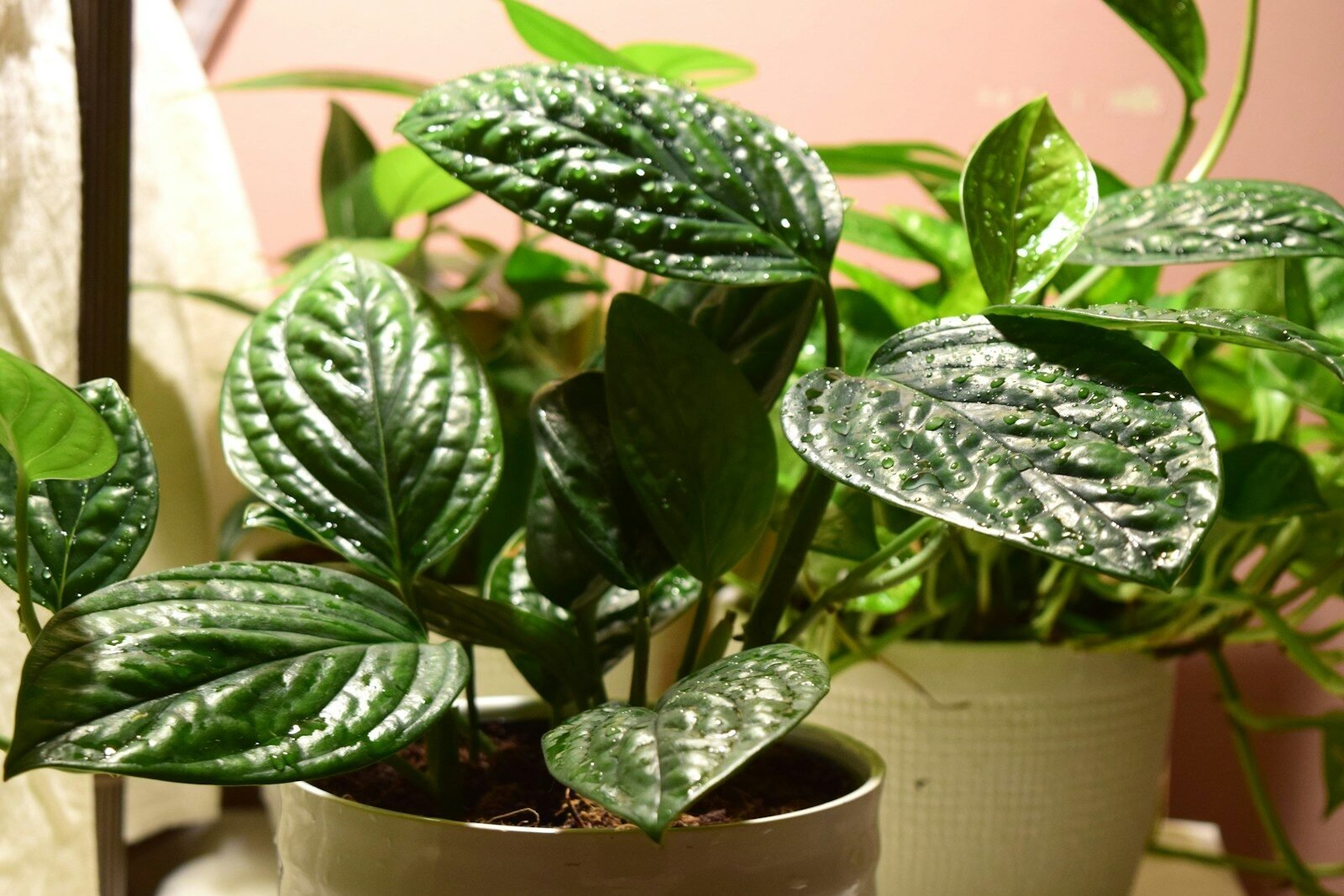
- Silvery/bronzed streaks: Their rasping mouthparts scrape cells, leaving reflective scars that look like silver brush marks.
- Stippling/speckling: Tiny pale dots that cluster along veins and edges.
- Distorted new growth: Twisted, stunted, or puckered leaves; flower buds may drop or open deformed.
- Black specks: Pepper‑like frass on leaf surfaces and window sills below the plant.
- Patchy discoloration: A dull, uneven sheen where cells are drained of chlorophyll.
Identification Methods: Tap test on white paper, sticky cards, and phone macro checks
- Tap test: Hold a white paper/card under a suspect leaf and gently tap. Thrips appear as tiny dashes that scuttle rather than jump. Use a flashlight to confirm movement.
- Sticky cards: Place blue or yellow cards near foliage; check daily for slender, rice‑grain insects. Blue often catches more thrips, yellow is fine if it’s what you have.
- Phone macro: Clip a macro lens or use 2x–3x zoom with good light. Thrips look elongated with a narrow head; nymphs are pale, adults may be darker with fringed wings.
- Leaf underside sweep: Slowly angle a light across the leaf to catch the silvery sheen and moving specks.
Look‑Alikes to Rule Out: Spider mites, aphids, leaf miners, and fungal issues
- Spider mites: Create fine webbing, dust‑like mites, and uniform stippling. Thrips leave streaks and black frass, rarely heavy webbing.
- Aphids: Soft, pear‑shaped, slow‑moving clusters that excrete sticky honeydew. Thrips are slender and fast, usually less sticky residue.
- Leaf miners: Winding tunnels inside the leaf. Thrips damage is on the surface, not inside.
- Fungal spots: Circular lesions with halos; do not move. Thrips damage looks scraped/silvered and changes quickly.
- For a broader pest check, browse our guides: Houseplant Pest Library.
General IPM (Integrated Pest Management) helps you differentiate and choose the least‑toxic fix.
Plants Most Affected: Calatheas, Monsteras, Hoyas, Peperomias, and more
Some plants are thrips magnets, especially those with tender new growth, variegation, or textured leaves. Keep a closer eye on:
- Calathea/Goeppertia & Maranta (thin leaves scar easily)
- Monstera & Philodendron (soft new leaves, fenestrations)
- Hoya (peduncles, buds, and new vines)
- Peperomia (succulent leaves hide nooks)
- Alocasia, Syngonium, Tradescantia (fast new growth)
Any plant can host thrips, but these deserve weekly checks during active growth.
What To Do Immediately After Confirmation: Isolate, rinse, prune, and monitor
- Isolate the plant away from your collection; increase distance from windows where drafts can spread adults.
- Rinse thoroughly: Shower or hose leaves (top and underside) to knock down adults and nymphs.
- Prune worst‑hit leaves and any deformed buds. Bag trimmings before trashing.
- Soap/oil spot treatment: Test a leaf, then apply insecticidal soap or neem oil on leaf undersides. Re‑apply per label.
- Add sticky cards at foliage height and note daily catches to gauge progress.
- Clean the area: Wipe shelves and sills to remove fallen nymphs and frass.
Ongoing Monitoring & Prevention: Quarantine, sanitation, airflow, and humidity tips
- Quarantine new plants for 2–4 weeks with sticky cards nearby.
- Sanitation: Wipe leaves, wash tools, and avoid moving plants room to room during treatment.
- Airflow: A gentle fan disrupts weak flyers; don’t blast plants, just keep air moving.
- Balanced humidity: 45–60% helps plants outgrow minor damage; avoid hot, dry air that favors outbreaks.
- Fertilizer moderation: Overfeeding creates soft growth thrips love.
- Soil check: Pupation can occur in soil—top‑dress with fresh mix or replace top 1–2 cm if populations persist.
- For science‑backed tactics, see UC IPM on Thrips.
Conclusion: Catch thrips early to protect your collection
When you know how to identify thrips on houseplants, you can act before they snowball. Look for silvery streaks, moving slivers, and black specks; confirm with a tap test and macro check. Isolate, rinse, prune, and monitor—then keep up with weekly inspections to safeguard your entire plant family.
FAQ: Can thrips fly? Do they live in soil? How long to clear an infestation? Are treatments safe for pets?
Can thrips fly? Yes—adults have fringed wings and are weak flyers, but drafts and fans can carry them far indoors.
Do thrips live in soil? Many species pupate in soil or leaf litter. That’s why rinsing foliage and refreshing the top layer of mix can help.
How long to clear an infestation? Typically 3–6 weeks with consistent IPM—enough time to break multiple life cycles with repeated treatments and monitoring.
Are treatments safe for pets? Use insecticidal soap or horticultural oils as labeled, keep pets out until leaves are dry, and avoid systemic insecticides on plants pets may nibble. When in doubt, consult the product label and your vet.
Need more pest IDs? Start here: All Plant Pest Articles.