Introduction: Why the Right Mix Prevents 90% of Problems
If you want a snake plant that grows steadily and shrugs off common issues, start with the one decision that prevents 90% of problems: the soil. The best soil mix for snake plant isn’t just dirt—it’s an engineered environment that balances drainage, aeration, and moisture retention without suffocating roots.
Snake plants (Sansevieria, now Dracaena trifasciata) are architectural, resilient, and forgiving—until their roots sit wet. Overly dense soil triggers rot, pests, and stalled growth. A well-designed, fast-draining, oxygen-rich blend turns that risk into confidence.
In this guide, you’ll get a 2026-optimized recipe with precise ratios for humid vs. arid homes and low vs. bright light. You’ll also learn the science behind the mix, how to test it at home, and the exact repotting steps to lock in success. Small changes in texture can transform your plant’s health and your peace of mind.
For more houseplant fundamentals, explore our plant care resources at Plant Doctoring – Plant Care.
Quick Summary: Best 2026 Recipe and Ratios for Snake Plants
Here’s the fast answer before we dive deeper. This is the best soil mix for snake plant in 2026—balanced for airflow, clean drainage, and steady moisture.
- Core 2026 Snake Plant Mix (by volume): 35% chunky orchid bark (medium), 25% pumice or perlite (pumice preferred), 20% high-quality coco coir (pre-rinsed, buffered), 10% coarse sand (horticultural), 10% general houseplant or cactus potting soil.
- pH target: Slightly acidic to neutral, ~6.0–7.0 (why pH matters).
- Container: Terra-cotta or breathable pot with a true drainage hole. Use a mesh screen, not rocks, to prevent mix loss.
- Watering cue: Allow at least the top 2–3 inches to dry; in larger pots, check mid-depth with a wooden skewer.
Adjust the ratios for your climate and light level in the section below. If you only change one thing, add more pumice and bark than you think you need. Air at the roots is your insurance policy.
Related reading: see our practical care tips and troubleshooting on the Plant Care Hub.
Soil Science 101: Drainage, Aeration, pH, and Oxygen to Roots
Snake plants evolved in rocky, lean substrates where rainfall drains quickly. Replicating that habitat indoors means prioritizing three principles: drainage, aeration, and stable pH.
- Drainage: Water must exit the container freely. Standing water blocks oxygen and invites anaerobic bacteria that cause root rot.
- Aeration: Chunky particles create macropores—air spaces that keep roots breathing. More air = stronger, whiter roots and faster recovery after watering.
- pH: Nutrient availability depends on pH. Snake plants perform best around neutral. Avoid extremes that lock out nutrients.
Two inert, airy ingredients dominate this strategy: pumice and perlite. Pumice is heavier, long-lasting, and less likely to float. Perlite is lighter and more affordable but can migrate upward over time. Both maintain those essential air pockets.
For a broader plant science backdrop, skim university guidance on potting media structure from the University of Minnesota Extension.
The Complete Recipe: Ratios for Humid vs. Arid Homes and Low vs. Bright Light
Customize your mix to your environment and light. Use the core mix as a baseline, then tune up or down on the chunky elements to avoid soggy roots or chronic thirst.
Humid Home + Low to Medium Light
- Ratio: 40% bark, 30% pumice (or 25% pumice + 5% perlite), 15% coco coir, 10% coarse sand, 5% potting soil.
- Why: Extra air for slower evaporation and lower photosynthesis. Reduces rot risk in dim rooms.
- Tip: Choose terra-cotta for additional breathability.
Humid Home + Bright Indirect/Direct Morning Sun
- Ratio: 35% bark, 25% pumice, 20% coco coir, 10% coarse sand, 10% potting soil.
- Why: Balanced—humidity slows drying, but bright light raises demand. Keep it airy and moderately retentive.
Arid Home + Low to Medium Light
- Ratio: 30% bark, 20% pumice, 25% coco coir, 15% coarse sand, 10% potting soil.
- Why: Add a little more moisture retention without going heavy. Roots still need oxygen even when it’s dry.
Arid Home + Bright Light (or Warm Rooms)
- Ratio: 30% bark, 25% pumice, 25% coco coir, 10% coarse sand, 10% potting soil.
- Why: Higher light and warmth drive faster transpiration. This boosts retention slightly while preserving fast flow-through.
Optional fine-tuning:
- Add 5% horticultural charcoal if your water is hard or you fertilize often.
- Swap 5–10% bark for extra pumice if you tend to overwater.
- In very cold homes, keep mixes slightly finer to reduce prolonged cold saturation.
New to calibrating water and light? Browse our practical how‑tos in the Plant Care Library.
Ingredient Breakdown: Pumice vs. Perlite, Bark, Sand, and Coco Coir
Every component in the best soil mix for snake plant has a job. Think of the blend as a team where each player brings structure, strength, and breathability.
- Pumice (preferred): Porous volcanic rock that’s heavier and long-lasting. It resists compaction, sinks into the mix, and doesn’t float. Excellent for oxygen and root anchoring.
- Perlite: Expanded volcanic glass—very light with high aeration. It can float toward the surface and break down faster than pumice but remains effective in fresh mixes.
- Orchid Bark (medium grade): Adds chunky structure that prevents a “mud cake” effect. As it ages, it gently enriches the mix with organic matter without turning soggy if the overall ratio is right.
- Coarse Sand (horticultural): Improves weight and flow-through while preventing fines from clogging pores. Avoid play sand; it compacts and reduces drainage.
- Coco Coir (buffered): Sustainable alternative to peat that holds moisture evenly while maintaining a lighter texture than many potting soils.
- Potting Soil (or cactus blend): A minor fraction to provide micronutrients and CEC (cation exchange capacity). Keep it light—too much invites compaction.
Add-ins (optional):
- Horticultural Charcoal: Helps adsorb impurities and moderates odors.
- Worm Castings (2–5%): A gentle nutrient bump; don’t overdo, or the mix retains too much moisture.
- Zeolite or Turface (5–10%): For advanced growers seeking stable porosity and nutrient buffering in very hard water regions.
Learn more about the plant you’re mixing for: Dracaena trifasciata (snake plant).
Mixing and Testing: Squeeze Test, Percolation Rate, and Root Checks
Don’t guess—test. A 10‑minute check reveals if your mix breathes right for your home.
Squeeze Test
- Moisten a handful of the mixed substrate until evenly damp.
- Squeeze firmly. It should clump lightly but break apart with a tap. If it forms a dense mud ball, add more bark and pumice.
Percolation Rate
- Place dry mix in a nursery pot with a drainage hole and mesh over it.
- Pour 1 cup (240 ml) of water evenly and start a timer.
- Target: First drip within 2–5 seconds, full drainage within 25–90 seconds. Slower than 90? Add 10–20% more chunky elements.
Root Oxygen Check
- After potting, water thoroughly once. Within 7–10 days, gently wiggle the plant. If the crown feels swampy or unstable, the mix may be too fine.
- Healthy snake plant roots are white to tan and firm. Mushy, brown roots mean excessive moisture or compacted substrate.
Want more hands-on diagnostics? See practical tutorials in our plant care collection.
Repotting Steps and Aftercare: Timing, Tamping, and First Water
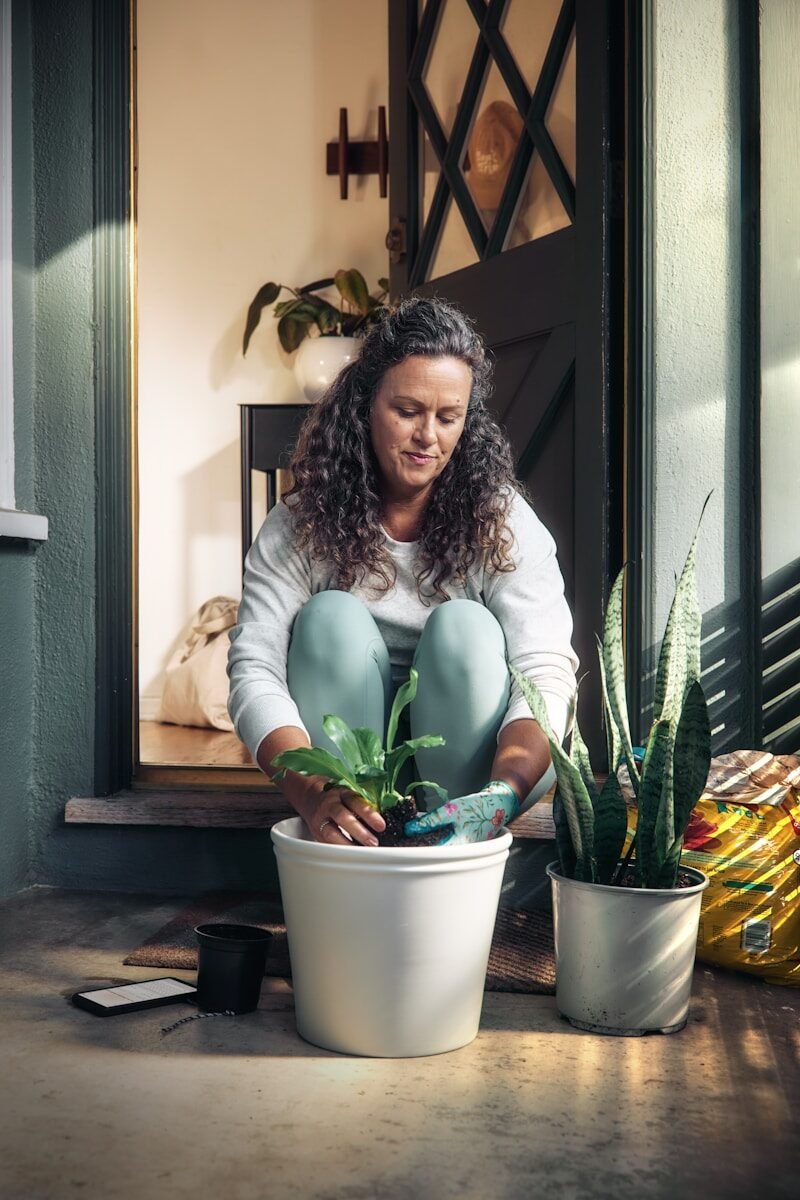
Ready to repot into the best soil mix for snake plant? Follow this sequence to protect roots and lock in long-term health.
When to Repot
- Spring to early summer is ideal, but any time works if roots are rotting or the plant is bursting its pot.
- Choose a pot 1–2 inches wider than the current one. Snake plants prefer slightly snug quarters.
Step-by-Step
- Prepare the pot: Place a mesh screen over the drainage hole. No rocks—those create a perched water table.
- Loosen the root ball: Remove excess old soil. Trim soft, brown roots with sanitized shears.
- Bottom layer: Add a cushion of your chunky mix to set the crown just below the rim.
- Center and backfill: Hold the plant upright and add mix around the roots, tapping the pot to settle particles without compacting.
- Final set: Leave a 1–2 cm watering lip at the top. Do not press hard—let the structure stay airy.
- First water: Water thoroughly until it drains. Discard saucer runoff.
Aftercare
- Place in bright, indirect light for 7–10 days. Avoid intense midday sun immediately after repotting.
- Wait until the top few inches are dry before watering again—usually 10–21 days depending on environment.
- Resume light fertilizing at 1/4 strength after 4–6 weeks during active growth.
More stepwise care and troubleshooting are available via our Plant Care guides.
Conclusion: A Consistent Mix for Consistent Results
Consistency builds confidence. When you standardize a breathable, fast-draining, pH‑balanced substrate and tailor it to your home’s humidity and light, snake plants reward you with steady growth and fewer emergencies.
The best soil mix for snake plant is not a secret formula—it’s a principled framework: more air, reliable drainage, and just enough moisture. Master that, and your plants will look as resilient as they’re meant to be.
Bookmark this recipe, try the quick tests, and adjust by 5–10% as your seasons change. Small tweaks, big results.
FAQ: Substitutions, Pre-Made Mixes, and Soil Longevity
Can I use only cactus/succulent soil?
It’s better than dense potting soil, but still not airy enough alone. Blend in 20–40% pumice and 20–30% bark to reach ideal porosity.
Pumice vs. perlite—what’s truly best?
Pumice wins for durability, weight, and stability. Perlite is perfectly serviceable and affordable. If you overwater or live humidly, choose pumice or a pumice‑heavy mix.
What if I can’t find orchid bark?
Use fir bark, pine bark fines (screen to medium), or coco husk chips. Avoid composted mulch or fine wood dust—they compact and sour the mix.
Is sand necessary?
Coarse horticultural sand adds flow-through and weight. If unavailable, substitute 5–10% extra pumice. Skip play sand; it compacts.
Pre-made options?
Start with a high-quality cactus/succulent blend, then add 20–30% pumice and 15–25% bark. Watch percolation; tune as needed.
How long does the mix last?
Expect 18–30 months before bark and coir noticeably break down. Refresh the top 1–2 inches yearly, and repot fully when percolation slows or roots crowd.
Do I need fertilizer in this mix?
Yes, but lightly. Use a balanced, dilute feed (e.g., 1/4 strength) during active growth. The airy mix supports roots; nutrition still matters.
What pot is best?
Terra-cotta is forgiving, especially in humid homes. Glazed ceramic works if your mix is extra airy. Always use a true drainage hole.
How do I know if it’s too airy?
If you must water every 3–4 days in low light, increase coco coir or reduce pumice by ~10%. Aim for 10–21 days between thorough waterings in typical indoor conditions.
Any trusted references on basics?
Read fundamentals on soil pH and plant substrates at the University of Minnesota Extension. For more how‑tos, explore our Plant Care archives.