Introduction: The fastest way to slash gnat populations in any room
If tiny flies are hovering over your houseplants, sticky cards are the quickest, lowest-effort way to stop the breeding cycle. Adult fungus gnats live short, frantic lives—stick them before they lay eggs and you’ll see fewer flyers in 24–48 hours. The best sticky traps for fungus gnats combine bright visual cues (yellow/amber), a long-lasting adhesive, and easy mounting so you can place them right where adults cruise.
Remember, traps target adults only. Pair them with larval control to finish the job. New to these pests? Skim the background on fungus gnats, then dig into the setup below. For more pest troubleshooting, browse our hub of guides at Plant Doctoring › Plant Pests.
Quick Summary: Top 5 picks by use-case, plus setup and replacement tips
Short on time? Here’s the cheat sheet.
- Best Overall: Rigid yellow cards with double-sided adhesive on wire stands; strong glue, reusable stakes.
- Best Budget: Mini yellow flags on twist ties; cheap, lots of pieces for many pots.
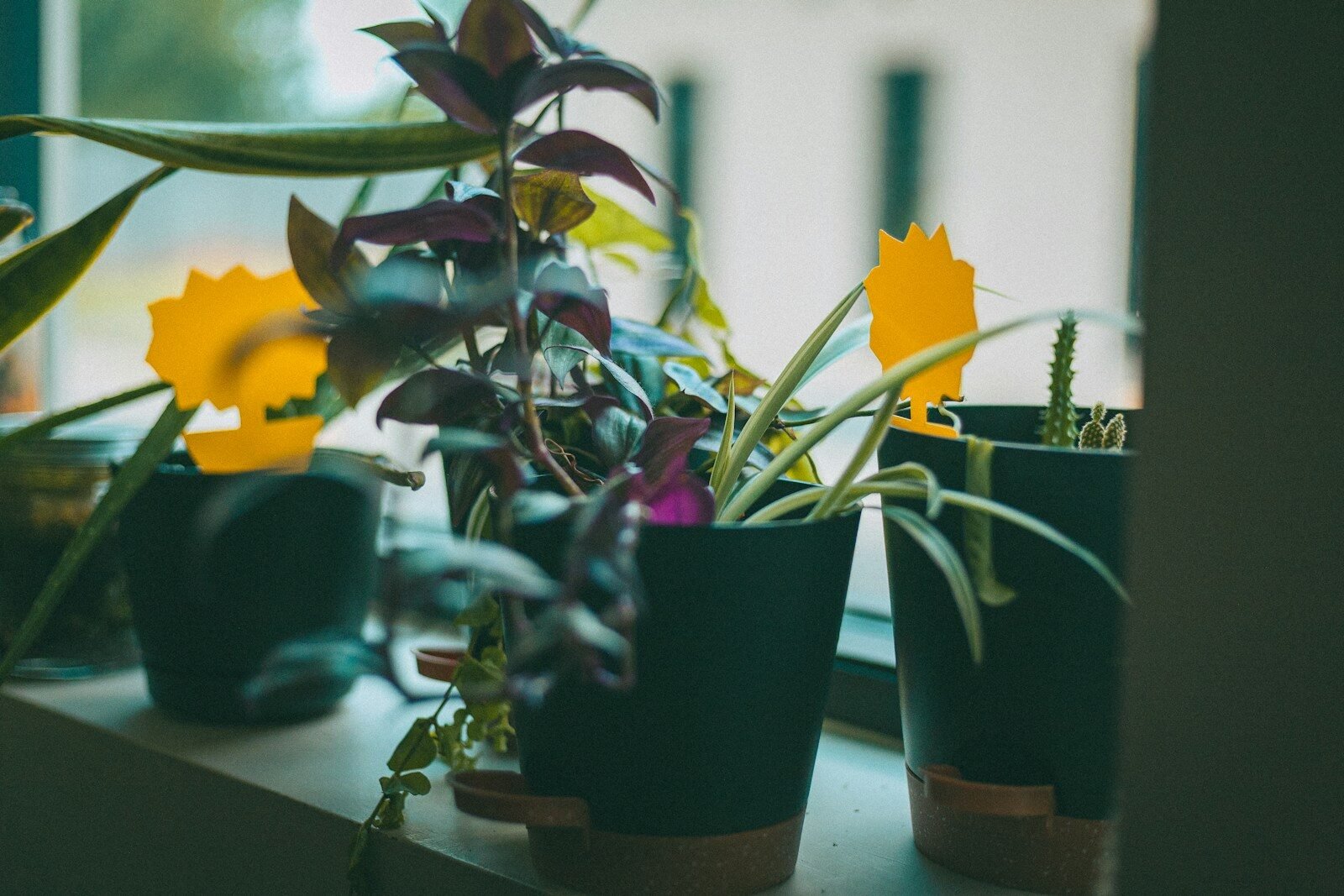
- Best Decorative/Discreet: Amber or leaf-shaped traps; blend into decor while still catching plenty.
- Best for Propagation Trays: Narrow strips for seedling domes and plug trays; slide in under vents.
- Best for Greenhouses: Large yellow hanging sheets/rolls; high catch rate across big spaces.
- Setup: Place at soil height and just above the canopy; angle slightly upward; keep 2–6 inches from foliage.
- Replacement: Swap when 50–70% covered or dusty; indoors usually every 2–4 weeks, faster during outbreaks.
- Safety: Keep out of pet/child reach; use guards or place behind foliage if you have curious cats.
Testing Methodology (2026): Glue strength, UV stability, catch rate, and ease of use
To separate hype from helpful, evaluate sticky traps with practical, repeatable checks that mirror real homes and grow rooms.
- Glue strength: Light fingertip tack plus a standardized drag test (e.g., sliding a clean coin) to gauge immediate grab and hold without oozing.
- UV stability: Compare color fade and tack loss after bright window exposure and under LED grow lights across 2–4 weeks.
- Catch rate: Note daily captures in typical hotspots (soil line, windowsill, near drains) across the first 7–10 days.
- Ease of use: Score peel speed, how cleanly liners come off, stake rigidity, and whether glue strings.
These factors map to real outcomes: stronger, UV-stable adhesives maintain a high catch rate, while easy mounts help you place traps exactly where gnats cruise.
Top Picks & Ratings: Best Overall, Budget, Decorative/Discreet, Propagation Trays, Greenhouse Sheets
Below are category winners by type (not specific brands), so you can match format to your space and plants.
- Best Overall — Rigid yellow cards with wire stands: Reliable double-sided adhesive, easy placement across pot sizes. Why it wins: top-tier visibility plus stable mounting near soil. Scores: Glue 9/10, UV 8/10, Catch 9/10, Ease 8/10. Overall: 8.6/10.
- Best Budget — Mini yellow flags on twist ties: Economical multi-packs for whole-home coverage. Why it wins: you can deploy many at once. Scores: Glue 7/10, UV 7/10, Catch 7/10, Ease 9/10. Overall: 7.5/10.
- Best Decorative/Discreet — Amber or leaf-shaped traps: Softer color blends in; great for living rooms and offices. Why it wins: high WAF (wife acceptance factor) without losing much performance. Scores: Glue 8/10, UV 8/10, Catch 7/10, Ease 8/10. Overall: 7.8/10.
- Best for Propagation Trays — Narrow dome strips: Slide into humidity domes or along tray rims. Why it wins: intercepts adults drawn to moist media. Scores: Glue 8/10, UV 7/10, Catch 8/10, Ease 7/10. Overall: 7.5/10.
- Best for Greenhouses — Large hanging sheets/rolls: Big coverage and excellent visibility from a distance. Why it wins: unmatched area suppression for heavy pressure. Scores: Glue 9/10, UV 9/10, Catch 10/10, Ease 6/10. Overall: 8.5/10.
Pro tip: if you run grow lights, pick traps marketed as UV-resistant. Cheaper cards can fade to dull mustard in a week, cutting attraction. Conversely, slightly amber-tinted cards look nicer indoors with only a small performance dip.
Placement for Max Catch: Heights, angles, pot vs. room traps, and safety around pets
Put traps where adults fly and rest. Simple tweaks can double your catch rate.
- Height: Place one trap at the soil line (gnats emerge there) and another just above the canopy (2–6 inches) to catch cruisers.
- Angle: Tilt 15–30° upward toward the main light source or window. This reduces dust and increases visual draw.
- Pot vs. room: In outbreaks, add room traps at windows, sinks, and drains (common moisture beacons). For single-plant issues, focus on pot-level traps.
- Airflow: Put cards near gentle airflow (fans, vents) where insects ride currents—but not so close that dust covers glue fast.
- Pets and kids: Keep cards behind foliage, inside wire guards, or higher than paw level. If contact happens, vegetable oil loosens adhesive from fur or skin.
For broader IPM placement ideas, see integrated pest management concepts and adapt them to your home layout.
Replacement Schedule: How often to swap, how many per pot, and disposal tips
Sticky traps work best when sticky and bright. Here’s a simple cadence that keeps them effective without overbuying.
- How often: Replace when 50–70% covered or lightly dusty. Typical cadence is every 2–4 weeks indoors; in greenhouses or near fans, plan on weekly.
- How many: Use 1 mini flag per 6-inch pot; 2–3 cards for large planters and clusters. In rooms, add 1–2 by the window or sink.
- Outbreak mode: Double the density for 7–10 days, then taper as counts fall.
- Disposal: Sandwich used cards between scrap cardboard or the release liners before tossing. Don’t compost adhesive products.
Keeping a simple replacement reminder in your calendar makes a huge difference once pressure drops and you shift to prevention.
Complementary Controls: BTi drenches, nematodes, and watering fixes
Adults on traps are half the battle. Stop larvae in the potting mix to end the cycle for good.
- BTi drenches: Products with Bacillus thuringiensis israelensis target gnat larvae; follow the label for dose and frequency. Learn more about BTi on Wikipedia and see EPA guidance for safe pest control at epa.gov.
- Beneficial nematodes (Steinernema feltiae): Mix and water into the soil to hunt larvae in moist media. Best used when you can keep soil evenly damp for a week.
- Watering fixes: Let the top 1–2 inches of soil dry between waterings, bottom-water when possible, improve drainage, and reduce standing water in saucers.
- Barriers and topdress: A thin layer of horticultural sand or fine gravel on top of soil can deter egg-laying and emerging adults.
Combine these with sticky cards and you’ve got a simple, effective IPM program. For more pest how-tos, check our pest library.
Conclusion: Pair traps with larval control for complete results
If you want fast relief, the best sticky traps for fungus gnats deliver immediate wins—fewer adults in sight within days. For lasting peace, layer in BTi or nematodes and smarter watering so larvae can’t reboot the population.
Keep a few spare cards on hand, rotate them on a schedule, and spot-place new ones whenever you pot up or start seeds. A little consistency beats any silver bullet.
FAQ: Are traps toxic? Do colors other than yellow work? How many do I need? Will traps catch whiteflies too?
- Are sticky traps toxic? The adhesives are typically non-toxic, but very sticky. Keep away from pets and kids. If contact happens, use vegetable oil to loosen, then mild soap and water.
- Do colors other than yellow work? Yellow is the gold standard for fungus gnats due to strong visual attraction. Amber does well and looks subtler indoors. Blue cards are better for thrips; stick with yellow/amber for gnats.
- How many do I need? As a rule: 1 mini flag per 6-inch pot; 2–3 per large planter; 1–2 room cards by windows or sinks. Add density for 7–10 days during outbreaks.
- Will they catch whiteflies too? Yes. Yellow cards also snag whiteflies and many other soft-bodied pests. For species-specific strategies, start with our pest hub at Plant Doctoring › Plant Pests and the background on whiteflies.
Want deeper ID help or trap placement ideas for your exact setup? Snap photos, note where you see the most flights, and place cards at those chokepoints first.