
Introduction: Stop Spotted Lanternfly—A Practical Homeowner Plan That Works
Spotted lanternfly control for homeowners doesn’t have to be confusing. With a clear, seasonal plan and a few proven tools, you can protect trees, vines, and ornamentals while reducing neighborhood infestations. This invasive sap-feeder spreads quickly, excretes sticky honeydew, and triggers sooty mold on leaves, decks, and cars.
This guide delivers a simple, science-based approach you can use today—no gimmicks. You’ll learn how to identify every life stage, what actions matter most in each season, and how to combine mechanical tactics with targeted insecticides safely and legally. We also outline how to coordinate with neighbors for block-by-block impact.
Want deeper plant-care context? Browse our in-depth resources in the Plant Problems library for related pest and disease guidance.
Quick Summary: High-Impact Actions by Season
- Winter (Dec–Mar): Scrape egg masses into alcohol or sealed bags; remove female tree-of-heaven; inspect firewood, outdoor gear, and vehicles.
- Spring (Apr–May): Install circle traps early for nymphs; use guarded sticky bands; start host tree pruning; monitor young instars on maples, willows, and grapes.
- Summer (Jun–Aug): Continue trapping; spot-treat high-density areas with contact insecticides on non-blooming hosts; consider legal, labeled systemic options for key trees.
- Fall (Sep–Nov): Target adults on favorite hosts (tree-of-heaven, walnut, red maple, grapes); intensify inspections before travel; map hotspots for winter egg removal.
Repeat this cycle yearly. Small, timely actions compound into big reductions.
Identify with Confidence: Eggs, Nymph Stages, Adults, and Key Host Trees
Eggs: Gray, putty-like smears often on bark, fence posts, patio furniture, trailers, or stone. Fresh clusters look mud-coated; older ones crack like dried mortar.
Nymphs: Early instars are black with white polka dots; later instars turn red-and-black with white spots. Nymphs hop and cluster on tender growth.
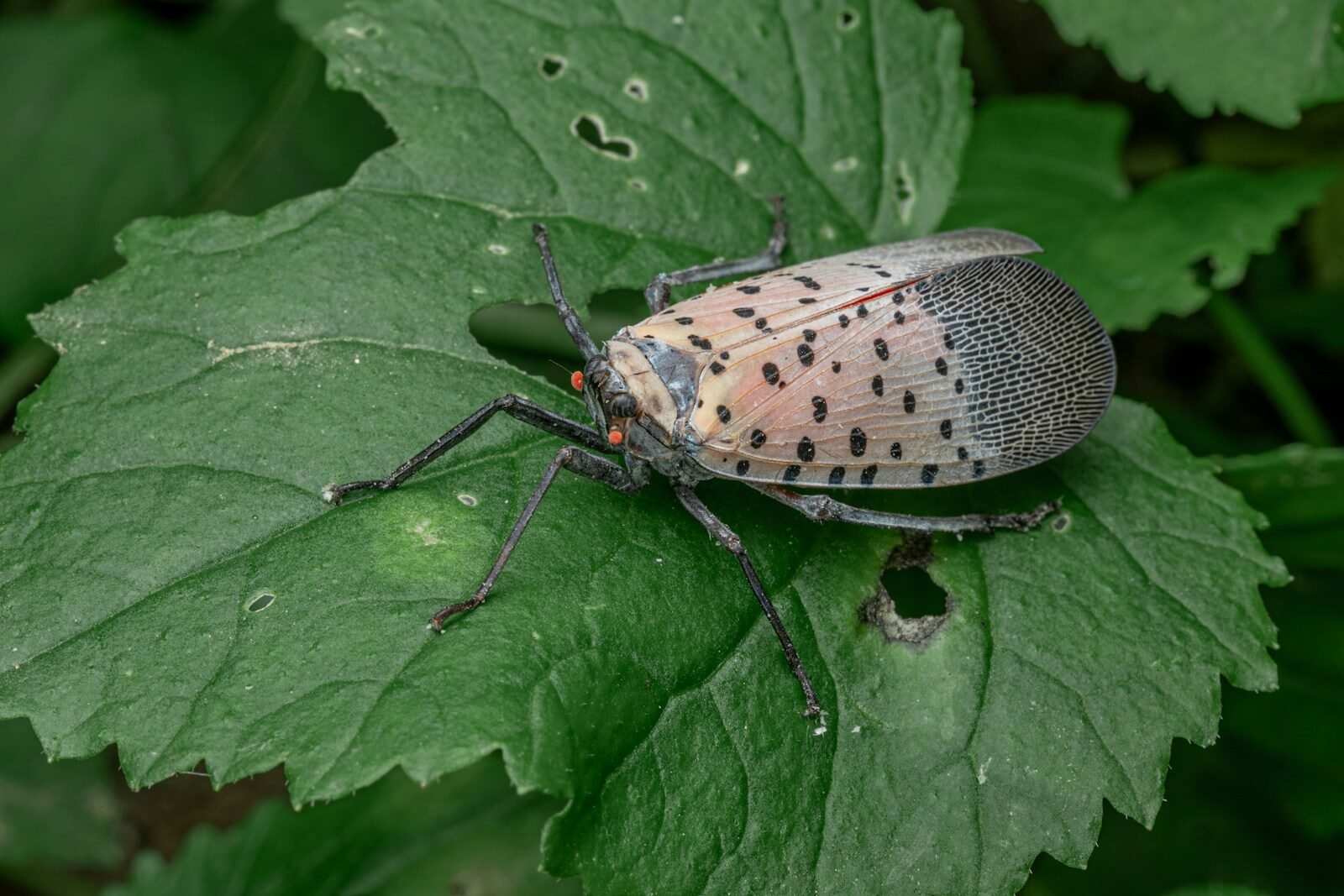
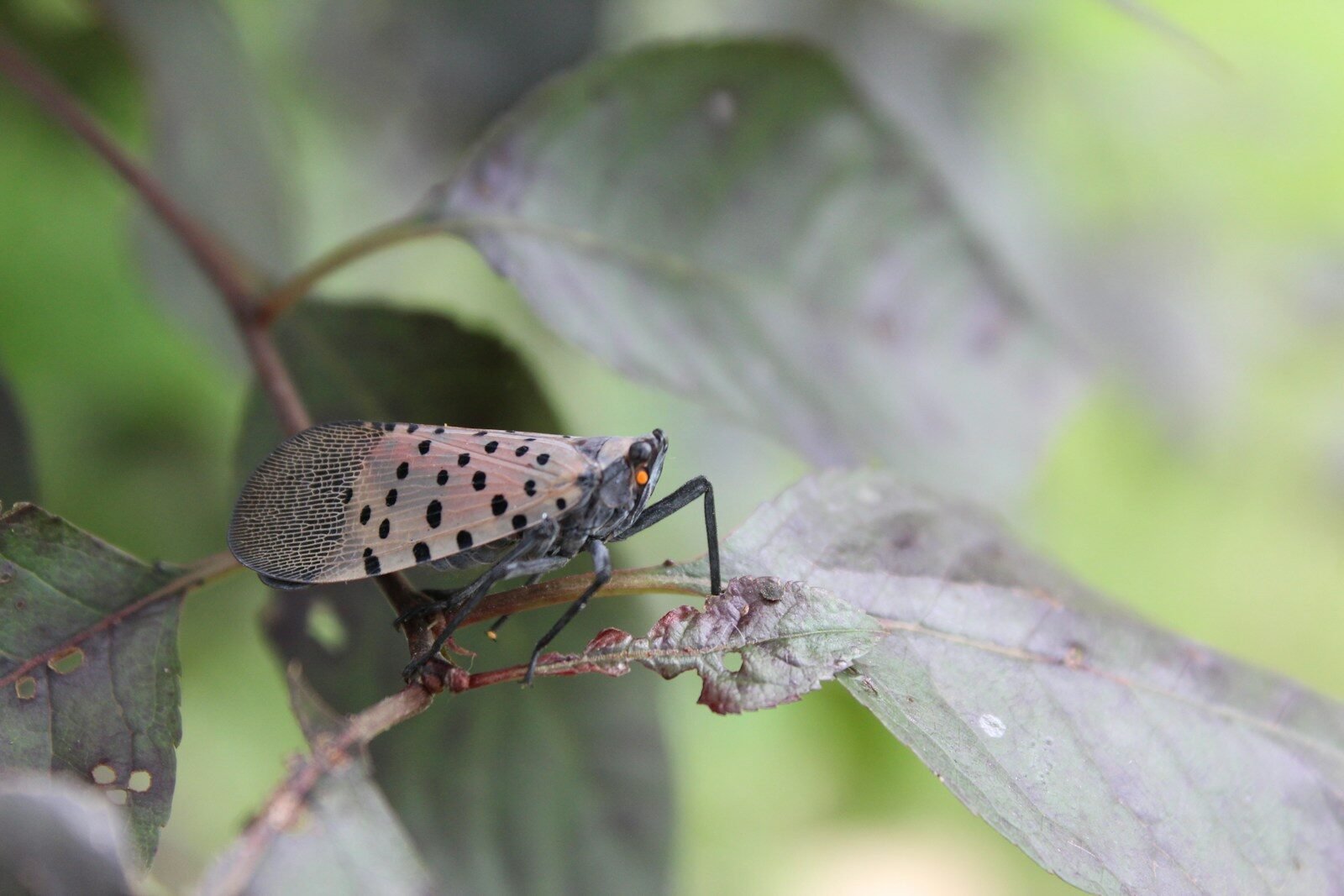
Adults: Wings closed: gray with black dots; wings open: striking red hindwings. Adults congregate on trunks and exude honeydew that can lead to sooty mold issues.
Key host trees: Ailanthus altissima (tree-of-heaven), red/silver maple, black walnut, willow, birch, and grapevines. Learn to spot tree-of-heaven quickly—smooth gray bark on young trees, large compound leaves, strong citrus/peanut-butter odor when crushed.
Seasonal Battle Plan: What to Do in Winter, Spring, Summer, and Fall
Winter: Prioritize egg scraping. Use a plastic card or putty knife to remove entire masses into isopropyl alcohol or a zip bag with hand sanitizer; seal and trash. Cut down female tree-of-heaven if safe to do so (leave a male as an optional trap tree only if you can maintain it). Inspect stored items, woodpiles, and vehicle frames.
Spring: Install circle traps as nymphs climb. If using sticky bands, add wildlife guards/cages, narrow the band, and check daily. Remove volunteer Ailanthus seedlings and prune suckers. Track first sightings to time increased effort.
Summer: Adults emerge; protect high-value trees and grapes. Use labeled contact sprays on non-blooming hosts and consider legal systemics for long-lasting suppression. Maintain traps and remove captured insects promptly.
Fall: Adults peak and lay eggs. Intensify trunk monitoring, treat hotspots, and inspect anything that moves—grills, patio sets, RVs—before trips. Map egg clusters for winter removal.
Mechanical Controls that Work: Egg Scraping, Circle Traps, and Safe Sticky Bands
Egg scraping (best ROI):
- Hold a jar with alcohol/hand sanitizer under the mass.
- Scrape firmly so every egg drops into liquid; incomplete removal lets eggs hatch.
- Seal, label, and dispose after 48 hours.
Circle traps: Cone or funnel traps guide climbing nymphs/adults into a collection bag. Install snugly on trunks, check often, and empty regularly. Minimal bycatch when fitted correctly.
Sticky bands—use with safeguards:
- Always add a wildlife guard (mesh/cage) to prevent bird and small-mammal contact.
- Use the narrowest band possible; place at 4–5 ft height; remove when pressure drops.
- Never leave unguarded bands. Review more prevention tips in our problem-solving hub.
Targeted Insecticides: Contact vs. Systemic Options, Safety, and Local Regulations
Contact insecticides: Quick knockdown of visible nymphs/adults. Common homeowner actives include bifenthrin, zeta-cypermethrin, lambda-cyhalothrin, carbaryl, and neem/pyrethrins. Apply to trunks and resting sites where SLF congregate. Avoid spraying blooming plants to protect pollinators. Respect re-entry and pre-harvest intervals.
Systemics: Longer residual via trunk injection or soil drench on labeled ornamental hosts. Actives may include dinotefuran or imidacloprid; regulations vary by state and may restrict homeowner use, application method, and proximity to water. Do not apply to flowering plants visited by pollinators or to edible crops unless the label clearly allows it.
Safety first: Read the entire label, follow PPE, and target only where SLF are active. Check local extension guidance and quarantine rules. When in doubt, consult a licensed arborist.
Coordinate with Neighbors: Block-by-Block Strategies for Real Impact
SLF travels easily between yards. A coordinated block plan multiplies results and saves time.
- Map hotspots: Note favorite host trees and grape arbors; mark egg clusters and adult congregation sites.
- Share tools: Pool circle traps, scraper kits, and wildlife guards. Create a shared schedule for checks.
- Standardize timing: Scrape eggs in winter together; deploy traps the same week in spring; align summer treatments.
- Communication: Use a group chat or spreadsheet to record catches, treatment dates, and reinfestation patterns.
For background on diagnosing plant stress caused by honeydew/sooty mold and other pests, see our Plant Problems library.
Conclusion: Eradicate Hotspots and Protect Your Landscape
Success against spotted lanternfly is about timing, repetition, and teamwork. Identify life stages accurately, prioritize egg scraping, run guarded traps during nymph climbs, and reserve insecticides for targeted, labeled use on priority hosts. Track wins and adapt as pressure shifts through the season.
Apply this plan and you’ll cut populations, protect high-value trees and vines, and reduce honeydew mess and sooty mold. Keep learning with our practical guides in the Plant Problems section, and encourage neighbors to join you—block-level action delivers the biggest impact.
FAQ: Spotted Lanternfly Control — Do’s, Don’ts, and Myths
- Do I need to kill adults? Yes—removing any stage helps. Still, egg scraping is the highest-return winter task.
- Are home remedies like vinegar or dish soap effective? Generally unreliable and can damage plants. Use tested, labeled products and mechanical controls.
- Will a cold winter wipe them out? Not reliably. Eggs are hardy; continue winter scraping and spring trapping.
- Are sticky bands safe? Yes, only with wildlife guards and frequent checks. Consider circle traps to minimize bycatch.
- Should I keep a trap tree-of-heaven? Only if you can maintain it safely and legally; many homeowners remove females and manage remaining males strategically.
- Can I treat edible plants? Only if the label allows it. Follow pre-harvest intervals and local regulations.
- Do I need a pro? For large trees, high-value landscapes, or systemic treatments, a licensed arborist is a wise choice.
- How do I prevent spread when traveling? Inspect vehicles, trailers, firewood, and outdoor gear; crush adults; remove eggs before trips.
Diagnose related leaf problems caused by honeydew and other pests in our expert guides.